


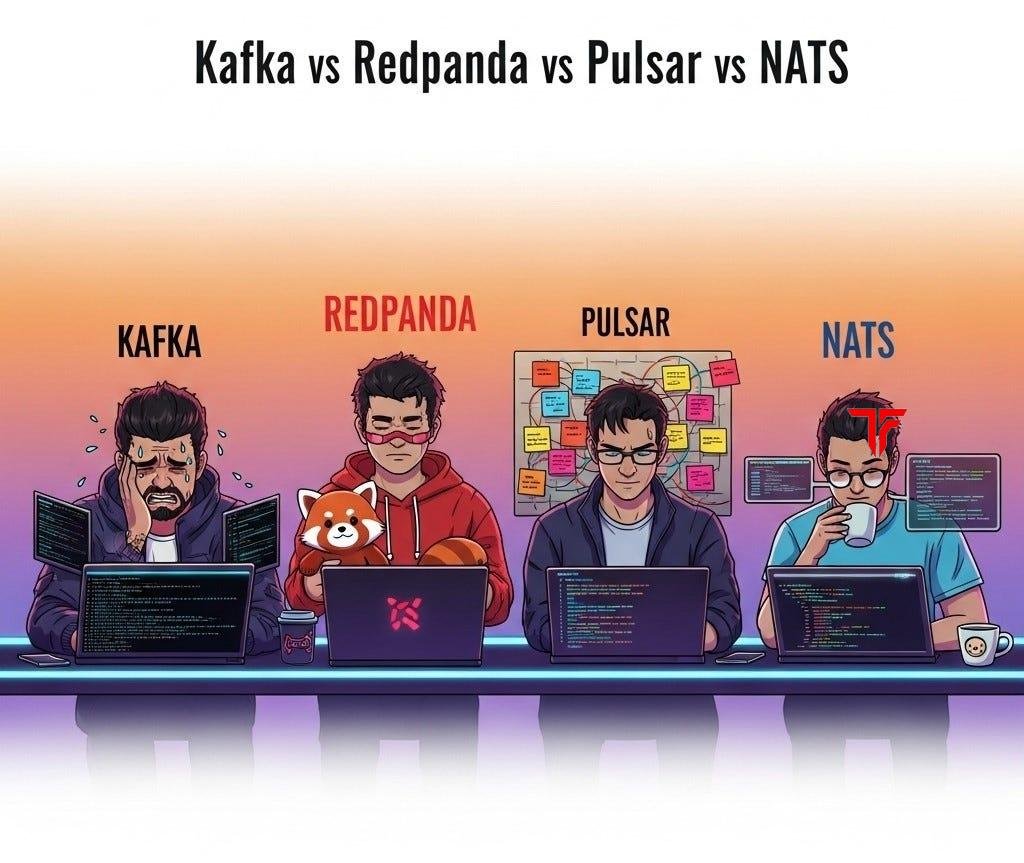
For teams planning on utilising Redpanda development services, the streaming-platform choice is not about chasing the newest broker. It is about choosing the operating model that can carry real-time products, analytics, compliance workloads, and AI systems without hidden drag. Redpanda vs Apache Pulsar has become a serious discussion because both platforms challenge older Kafka-heavy assumptions.
Redpanda keeps the Kafka model familiar while cutting much of the operational weight that made streaming clusters hard to live with. Apache Pulsar takes a broader platform view, separating serving and storage while building tenancy, subscriptions, and geo-replication into its design. That difference shapes cost, replay, migration risk, and AI readiness.
Architecture Sets the Direction
Redpanda suits teams that want Kafka-compatible streaming with fewer moving parts. Its single-binary design reduces the services engineers must deploy, monitor, patch, and debug. For data teams already using Kafka clients, connectors, and observability patterns, that compatibility can shorten migration planning.
Pulsar follows another path. Brokers handle traffic, BookKeeper handles durable storage, and metadata services coordinate the cluster. This gives Pulsar a stronger separation between compute and storage, which helps when workloads need independent scaling, deep retention, or many tenants on one platform.
The trade-off is clear: Redpanda favours operational sharpness, while Pulsar favours architectural spread. A lean team may value Redpanda’s smaller surface area. A platform team serving many departments may accept Pulsar’s complexity because its structure fits shared environments better.
Storage and Replay Change the Debate
Most streaming comparisons talk about throughput first, but storage is where the long-term decision becomes clearer. Businesses replay old events, rebuild state, audit decisions, recover consumers, and feed models with historical context.
In the Redpanda and Apache Pulsar comparison, Redpanda works well when teams need a Kafka-style log with strong performance and simpler retention management. Tiered storage can move older data away from expensive hot disks, which helps cost control.
Pulsar has a stronger native story when backlog handling and long replay windows sit at the platform centre. Its storage layer was designed separately from brokers, so large histories and different subscription patterns can be managed with more flexibility. Cloud-native event streaming platforms for real-time data pipelines and AI-driven infrastructure (technology comparison). BookKeeper capacity, ledger recovery, metadata health, and offload policies need ownership.
The better question is this: can your team replay six months of events without breaking the live system?
Cost Is More Than Cloud Pricing
The Redpanda vs Apache Pulsar decision often gets reduced to infrastructure spend, but the real cost sits across people, incidents, and change management.
Cost layers that matter in production include:
- Infrastructure: brokers, storage nodes, object storage, and network throughput
- Operations: monitoring, upgrades, scaling, failover drills, and on-call effort
- Migration: client compatibility, connector changes, schema testing, and rollback planning
- Governance: tenant isolation, quotas, audit trails, and retention rules
- Recovery: backlog clearing, consumer catch-up, and disaster testing
Redpanda can reduce cost when fewer components and Kafka compatibility lower engineering effort. Pulsar can justify its operational cost when multi-tenancy, geo-replication, and long-lived replay are core platform requirements.
Real-Time AI Raises the Standard
AI-ready streaming is not only about pushing events quickly into a model. Modern AI systems need clean event history, traceable decisions, reliable feature updates, policy signals, and safe isolation between users, products, or agents.
Redpanda is attractive when AI pipelines need low-latency Kafka-compatible streams with less operational friction. It can support real-time recommendations, fraud triggers, observability flows, and feature pipelines where speed and simplicity matter.
Pulsar becomes compelling when AI workloads span many teams or tenants. If agents, products, or business units need isolated streams, separate subscriptions, deep replay, and cross-region movement, Pulsar’s model can offer stronger platform control.
This is where the Redpanda-Pulsar comparison becomes more current. Real-time AI rewards platforms that preserve context, recover predictably, and keep governance visible when automated decisions depend on streaming data.
Where Each Platform Fits
Redpanda is usually stronger when Kafka compatibility is fixed, latency matters, migration risk must stay low, and a small platform team owns production support.
Apache Pulsar makes more sense when multiple teams share the same backbone, tenant controls matter, long retention is a daily need, geo-replication is part of the architecture, and streaming and queueing patterns must coexist.
A Practical Way to Decide
Redpanda vs Apache Pulsar should end with workload evidence, not preference. Test both platforms against real message sizes, partition counts, replay windows, consumer lag, failure recovery, cloud disks, and cross-region needs.
Choose Redpanda when migration speed, Kafka compatibility, low latency, and simpler operations define success. Choose Pulsar when tenancy, replay depth, global streaming, and platform-level governance carry more weight.
For businesses building real-time systems that must support analytics today and AI workflows tomorrow, the stronger choice is one that the team can operate under pressure. That is where technical architecture becomes business resilience, and where experienced big data consulting services can turn a platform comparison into a reliable production decision.
READ MORE: thefundly
